Abstract
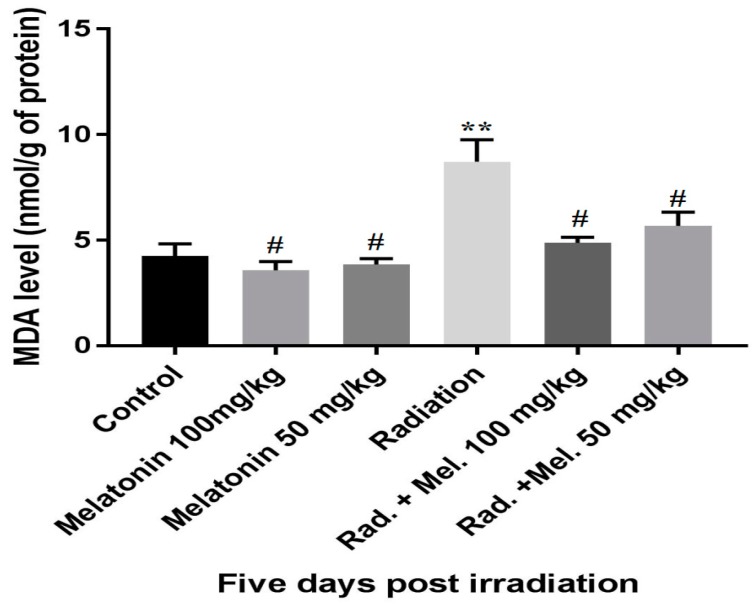
Background and Objectives: Radiation enteritis is a common side effect after radiotherapy for abdominal and pelvic malignancies. The aim of the present study was to investigate the protective effect of melatonin, known for its free radical scavenging ability, against radiotherapy-induced small intestinal oxidative damage. Materials and Methods: Thirty male Wistar rats were randomly assigned to six groups (5 rats in each) as follows: Group I (control group) rats received neither radiation nor melatonin; group II rats received only 8 Gy single dose of gamma radiation to their abdomen and pelvis regions; group III (administered with only 50 mg/kg melatonin); group IV (administered with only 100 mg/kg melatonin); group V (50 mg/kg melatonin + 8 Gy radiation), group VI (100 mg/kg melatonin + 8 Gy radiation). All rats were sacrificed after 5 days for biochemical assessments of their intestinal tissues. Results: Treatment with melatonin post irradiation significantly reduced malondialdehyde (MDA) levels as well as increased both superoxide dismutase (SOD) and catalase (CAT) activities of the irradiated intestinal tissues. In addition, melatonin administration with different doses pre irradiation led to protection of the tissues. Moreover, the 100 mg/kg dose was more effective compared to 50 mg/kg. Conclusions: The results of our study suggest that melatonin has a potent protective effect against radiotherapy-induced intestinal damage, by decreasing oxidative stress and increasing antioxidant enzymes. We recommend future clinical trials for more insights.


source: https://pubmed.ncbi.nlm.nih.gov/31242652/