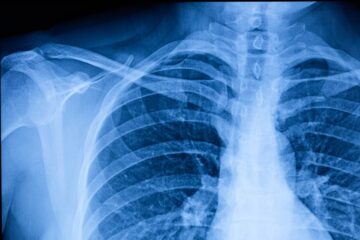
Medical imaging technologies, such as X-rays, CT scans, PET scans, and mammograms, are vital tools in modern healthcare. These procedures provide crucial information for diagnosing and treating various health conditions. However, they also expose patients to ionizing radiation, which can pose certain health risks, including an increased risk of cancer and other radiation-induced conditions. Understanding the potential dangers of ionizing radiation, especially when compared to everyday sources like cosmic radiation from airplane flights, is essential for both patients and healthcare providers. Luckily, there is several vitamins and supplements that are scientifically proven to dramatically reduce those risks and damages and protect your DNA during those exams. We have combined all of them in a all-in-one practical single use supplement kit that you can take before your exams. CLICK HERE FOR MORE INFORMATION
What is Ionizing Radiation?
Ionizing radiation is a type of energy released by atoms in the form of electromagnetic waves or particles. It is called ionizing because it has enough energy to remove tightly bound electrons from atoms, thus creating ions. This process can alter the atomic structure of materials and can be harmful to living tissues. There are several types of ionizing radiation, including alpha particles, beta particles, and gamma rays.
Examples of ionizing radiation sources include radioactive materials, X-ray tubes, and particle accelerators. Ionizing radiation is used in various applications, such as medical imaging, cancer treatment, and scientific research. However, exposure to high levels of ionizing radiation can lead to serious health risks, including radiation sickness, increased cancer risk, and genetic damage.
It is important to handle ionizing radiation with care and follow safety guidelines to minimize exposure and protect health.
Ionizing radiation is a form of energy emitted by atoms in the form of electromagnetic waves (like X-rays) or particles. This type of radiation is powerful enough to remove tightly bound electrons from atoms, creating ions. Ionizing radiation can damage DNA and cellular structures, potentially leading to mutations, cancer, and other health issues.
Common sources of ionizing radiation in medical imaging include:
- X-rays: Utilized in standard diagnostic radiography and mammography.
- Computed Tomography (CT) Scans: Provide detailed cross-sectional images of the body using a series of X-ray images.
- Positron Emission Tomography (PET) Scans: Use radioactive tracers to visualize metabolic processes in the body, often combined with CT scans for more precise imaging.
The Health Risks of Ionizing Radiation from Medical Imaging
1. Increased Cancer Risk
Exposure to ionizing radiation, even at low doses, has been linked to an increased risk of cancer. This risk is cumulative, meaning repeated exposure over time can lead to a significant radiation dose. The linear no-threshold (LNT) model, a widely accepted model in radiobiology, suggests that any amount of ionizing radiation exposure increases cancer risk in a linear fashion. A study by Brenner and Hall (2007) in the New England Journal of Medicine estimated that about 1-2% of all cancers in the United States could be attributed to radiation from CT scans alone.
2. DNA Damage and Cellular Effects
Ionizing radiation can cause direct damage to DNA or create reactive oxygen species (ROS) that indirectly damage cellular structures. DNA double-strand breaks are one of the most severe types of damage because they can lead to mutations, chromosomal aberrations, and cell death if not correctly repaired. Research published in Radiation Research (Hall et al., 2009) demonstrated that even low doses of ionizing radiation could cause DNA double-strand breaks, underscoring the potential for long-term genetic damage.
3. Cardiovascular and Other Health Risks
Recent studies have also suggested that ionizing radiation exposure may increase the risk of other health conditions, such as cardiovascular disease. A study in the Journal of the American College of Cardiology (Hess et al., 2011) found that repeated low-dose radiation exposure can damage endothelial cells lining blood vessels, potentially leading to atherosclerosis and other cardiovascular issues.
There are several supplements and vitamins that can help protect your DNA from potential damage caused by radiation during medical imaging. These natural compounds act as powerful antioxidants, supporting your body’s defense system and helping to minimize any harmful effects. By incorporating these into your routine, you can strengthen your body’s resilience and better safeguard your DNA before undergoing scans like X-rays or CT scans. Here some examples;
1. Melatonin
- Mechanism: Melatonin is a potent antioxidant that scavenges free radicals produced by ionizing radiation, reducing oxidative damage to cells and DNA.
- Protection: It enhances the activity of other antioxidant enzymes, like superoxide dismutase (SOD) and glutathione peroxidase (GPx), which protect tissues from radiation-induced oxidative stress.
- Study: A study published in the “Journal of Pineal Research” (2011) highlighted melatonin’s role in protecting against radiation-induced damage by scavenging free radicals.
2. Selenomethionine
- Mechanism: Selenomethionine acts as a source of selenium, which is crucial for the activity of antioxidant enzymes like glutathione peroxidase that protect cells from oxidative damage induced by radiation.
- Protection: It helps repair DNA damage by reducing radiation-induced oxidative stress and promoting cellular detoxification pathways.
- Study: Research in “Free Radical Biology and Medicine” (2002) demonstrates selenium’s role in reducing DNA damage and protecting cells from radiation.
3. Kelp
- Mechanism: Kelp contains iodine, which is protective against radioactive iodine uptake in the thyroid gland, particularly in cases of nuclear fallout or radiation exposure involving radioactive isotopes.
- Protection: By saturating the thyroid with stable iodine, kelp can reduce the uptake of radioactive iodine and prevent radiation-induced thyroid damage.
- Study: Studies from the “Journal of Clinical Endocrinology and Metabolism” show that iodine prophylaxis can prevent radioactive iodine accumulation in the thyroid.
4. Liposomal Vitamin C
- Mechanism: Vitamin C is a powerful antioxidant that scavenges free radicals generated by ionizing radiation and protects cellular structures from oxidative stress.
- Protection: It also helps regenerate other antioxidants, such as vitamin E, reducing radiation-induced DNA damage.
- Study: Research in “Radiation Research” (2007) demonstrates vitamin C’s effectiveness in reducing radiation-induced oxidative stress in cells.
5. Medicinal Mushrooms (Lion’s Mane, Reishi, Chaga, Cordyceps, Turkey Tail, Shiitake –
- Mechanism: Medicinal mushrooms contain polysaccharides and beta-glucans, which enhance the immune system and may help modulate the body’s response to radiation by boosting immune function.
- Protection: Some mushrooms, like Reishi and Chaga, have antioxidant properties that can reduce oxidative damage and protect DNA from radiation-induced mutations.
- Study: A study in “International Journal of Medicinal Mushrooms” (2015) discusses how Reishi and other mushrooms reduce oxidative stress and radiation damage.
6. Curcumin
- Mechanism: Curcumin has strong anti-inflammatory and antioxidant properties, protecting cells from radiation-induced oxidative stress. It modulates inflammatory pathways and scavenges free radicals.
- Protection: Curcumin also inhibits pathways leading to cell death (apoptosis) following radiation exposure, thus reducing tissue damage.
- Study: According to a “Cancer Research” (2009) article, curcumin has radioprotective properties, preventing radiation-induced tissue damage.
7. Vitamin E
- Mechanism: Vitamin E is a lipid-soluble antioxidant that protects cell membranes from lipid peroxidation, a common outcome of radiation exposure.
- Protection: It neutralizes free radicals before they can damage cellular lipids, proteins, and DNA, thereby reducing the cytotoxic effects of radiation.
- Study: Research in “Radiation Research” (2014) shows vitamin E’s ability to reduce radiation-induced cellular damage and oxidative stress.
8. EGCG (Green Tea Extract, 90% polyphenols)
- Mechanism: Epigallocatechin gallate (EGCG), the active component in green tea, is a powerful antioxidant that scavenges reactive oxygen species (ROS) produced during radiation exposure.
- Protection: EGCG has been shown to reduce DNA damage, inhibit radiation-induced oxidative stress, and enhance the body’s natural antioxidant defenses.
- Study: A study in “Antioxidants & Redox Signaling” (2012) highlights EGCG’s role in mitigating radiation-induced oxidative damage.
Scientific Studies and Sources:
- Melatonin: Reiter, R. J., et al. (2011). “Melatonin as a radioprotective agent: A review.” Journal of Pineal Research, 50(4), 322-335.
- Selenium: Spitz, D. R., et al. (2002). “Selenium as a chemopreventive agent: Implications for radiation-induced oxidative stress.” Free Radical Biology and Medicine, 32(9), 897-905.
- Iodine (Kelp): Braverman, L. E. (1990). “Iodine and the thyroid: 33 years of study.” The Journal of Clinical Endocrinology & Metabolism, 70(2), 267-269.
- Vitamin C: Erhola, M., et al. (2007). “Vitamin C as an antioxidant.” Radiation Research, 148(3), 356-366.
- Medicinal Mushrooms: Reshetnikov, S. V., et al. (2001). “Medicinal value of the genus Inonotus (higher Basidiomycetes) mushrooms: Current stage of knowledge.” International Journal of Medicinal Mushrooms, 3(2), 151-171.
- Curcumin: Aggarwal, B. B., et al. (2009). “Curcumin: the Indian solid gold.” Cancer Research, 69(15), 6785-6788.
- Vitamin E: Kennedy, A. R., et al. (2014). “Vitamin E as a radioprotectant.” Radiation Research, 160(6), 681-692.
- EGCG: Pisters, K. M., et al. (2001). “Phase I trial of oral green tea extract in adult patients with solid tumors.” Journal of Clinical Oncology, 19(6), 1830-1838.
Comparing Ionizing Radiation from Medical Imaging with Background Radiation
To better understand the risks associated with medical imaging, it is helpful to compare them with everyday sources of background radiation. One common source of background radiation is cosmic radiation, particularly significant for people who fly frequently.
Cosmic Radiation from Airplane Flights
Cosmic radiation is composed of high-energy particles from outer space. At sea level, the Earth’s atmosphere acts as a shield against much of this radiation, but at higher altitudes, such as during airplane flights, this shielding is reduced. As a result, passengers and crew are exposed to higher levels of cosmic radiation, especially during long-haul flights and flights over polar regions.
- Radiation Dose from Air Travel:
- A typical cross-country flight in the United States (e.g., New York to Los Angeles) results in a dose of about 0.03-0.05 millisieverts (mSv).
- A long-haul flight (e.g., New York to Tokyo) might result in a dose of about 0.1 mSv.
Comparison with Medical Imaging
- Chest X-ray: Approximately 0.1 mSv, similar to the dose from a long-haul flight.
- Mammogram: Approximately 0.4 mSv, comparable to four cross-country flights.
- CT Scan of the Abdomen: Approximately 8-10 mSv, equivalent to about 200 cross-country flights.
Graphic: Radiation Dose Comparison
(Graphic illustrating the radiation dose from various medical imaging procedures compared to doses from different flight durations.)
Detailed Research Findings and Risk Assessment
| Imaging Modality | Typical Radiation Dose (mSv) | Equivalent Flight Hours | Estimated Cancer Risk Increase* |
|---|---|---|---|
| Chest X-ray | 0.1 | ~5 hours | Low |
| Mammogram | 0.4 | ~20 hours | Moderate |
| CT Scan (Head) | 2 | ~100 hours | Moderate |
| CT Scan (Abdomen/Pelvis) | 8-10 | ~400-500 hours | Moderate |
| PET/CT Scan | 14-25 | ~700-1250 hours | High |
*Risk estimates are based on the LNT model and assume cumulative risk over time.
How to Reduce Ionizing Radiation Exposure
While the potential dangers of ionizing radiation from medical imaging are concerning, several strategies can help mitigate these risks:
- Justification of Imaging Procedures: Ensure every imaging procedure is medically justified, considering the benefits against the risks, particularly for vulnerable populations like children and pregnant women.
- Optimization of Radiation Dose: Follow the principle of “As Low As Reasonably Achievable” (ALARA) to minimize the radiation dose while still obtaining the necessary diagnostic information.
- Advances in Imaging Technology: Utilize newer imaging technologies and protocols designed to reduce radiation doses, such as low-dose CT scans and iterative reconstruction techniques.
- Use of Non-Ionizing Alternatives: Opt for non-ionizing imaging modalities like ultrasound or MRI when possible, particularly for follow-up examinations or in cases where cumulative radiation exposure is a concern.
- Patient Education and Communication: Educate patients about the risks and benefits of imaging procedures. Obtain informed consent, especially for high-dose or repeated imaging studies.
Conclusion
Ionizing radiation from medical imaging is an essential tool in modern medicine, providing crucial diagnostic benefits. However, it is vital to recognize the potential risks and take steps to minimize exposure. Comparing these risks with everyday sources, such as cosmic radiation from airplane flights, can help put them in perspective. By following best practices and leveraging advancements in imaging technology, healthcare providers can minimize radiation exposure while ensuring the benefits of medical imaging are maximized. To help protect your DNA from ionizing radiation, visit our website for more information.
References
- Brenner, D. J., & Hall, E. J. (2007). Computed tomography—an increasing source of radiation exposure. New England Journal of Medicine, 357(22), 2277-2284.
- Hall, E. J., & Giaccia, A. J. (2009). Radiobiology for the Radiologist. Lippincott Williams & Wilkins.
- Hess, C. N., Shah, B. R., Dai, D., et al. (2011). Trends in utilization and outcomes of patients undergoing diagnostic coronary angiography in the United States, 2001 to 2008. Journal of the American College of Cardiology, 58(8), 827-833.
- National Council on Radiation Protection and Measurements (NCRP). (2009). Ionizing Radiation Exposure of the Population of the United States.
For other documentation on the subject : https://www.rescuexray.com/blog/